
Franchise category
Cleaning Franchises in the USA: Residential & Commercial Opportunities
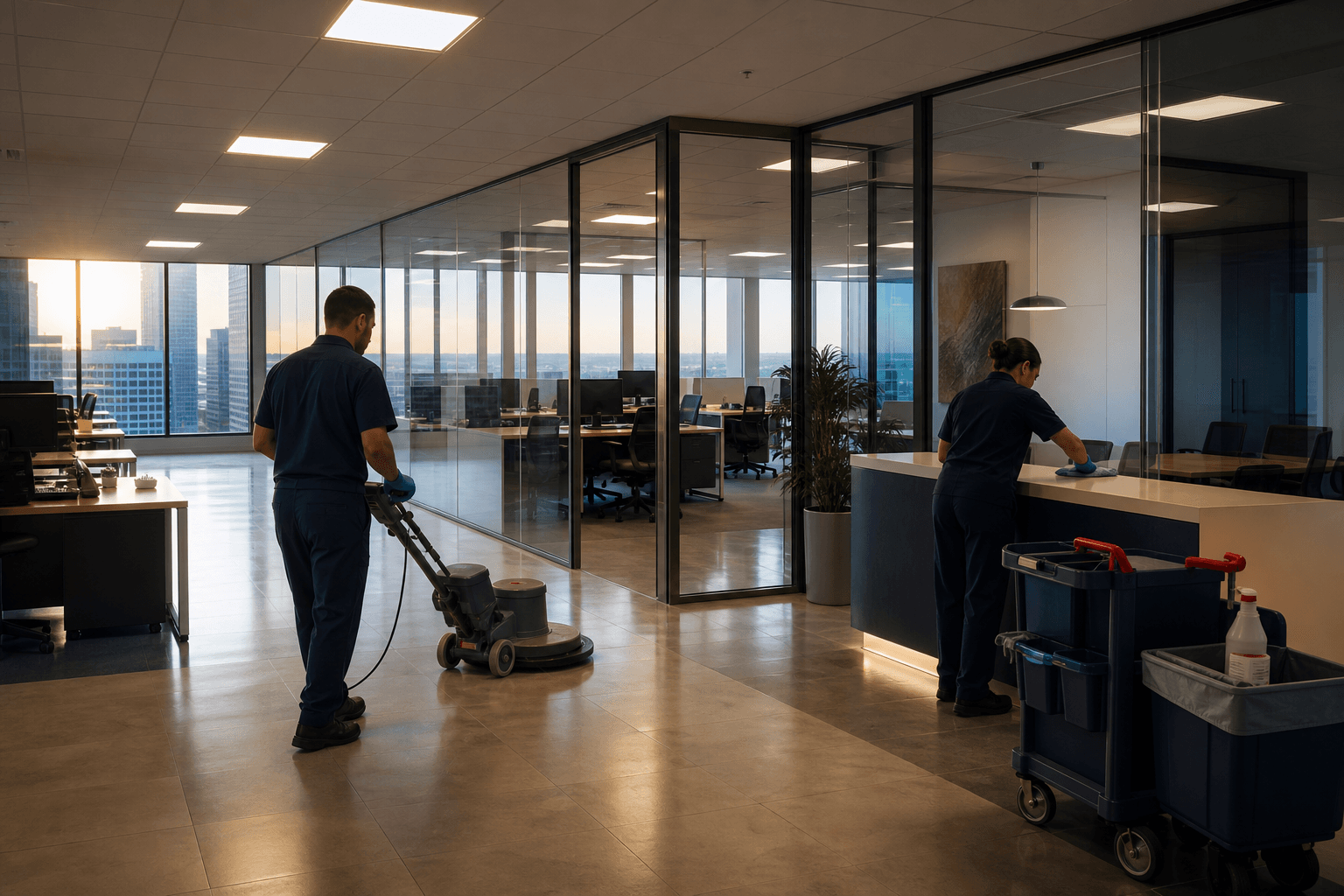
Every home and office in America needs cleaning, recession or not. So why do some cleaning franchises scale into multi-territory businesses while others stall at one van and one crew?
Curated brands in this category
1
Estimated initial investment
$76,600 to $147,100
States with operations
41
General market ranges based on the public Franchise Disclosure Documents (FDD) of curated brands. Educational reference, not an offer of any specific franchise.
Why This Segment Is Pulling Investors In Right Now
Cleaning is one of the few categories in franchising where the demand side never really needs to be explained. Homes get dirty. Offices get dirty. Medical facilities, gyms, retail stores, and warehouses all need someone showing up on a schedule to clean them, and that need doesn't disappear when the economy tightens. If anything, commercial accounts tend to lock in through contracts, which gives an owner something a lot of small businesses don't have: predictable, recurring revenue booked weeks or months in advance.
That stability is exactly what attracts a certain kind of investor to this category. It's not the person who wants to build a personal brand around a product. It's the person who wants a business model with a simple value proposition, a large addressable market, and a path to running it like a company rather than a job. The official category description for this segment is direct about it: owners operate the business and typically do not do the cleaning themselves. That single sentence changes who this franchise is for. It's built for an owner-operator or executive model, not for someone looking to hold a mop.
TFG's curated portfolio currently includes one brand in this segment, operating across 41 states, a footprint that reflects just how portable and scalable the cleaning model is once the operating system is proven.

How the Model Actually Works
Every cleaning franchise operates under a Franchise Disclosure Document, the legal document every franchisor must give prospective franchisees before any money changes hands. The FDD is where the real mechanics of the business live, not the marketing pitch.
Structurally, cleaning franchises tend to follow a familiar pattern. There's an initial franchise fee paid to join the system and receive training, brand rights, and access to operating systems. There's an ongoing royalty, typically a percentage of gross revenue, paid to the franchisor for continued use of the brand and support systems. And there's a defined territory, a geographic area where the franchisee has exclusive or protected rights to market and service accounts, which matters enormously in a route-based business like cleaning where density and drive time directly affect margin.
What varies from one system to another, and what a serious investor needs to read closely, is how territory is drawn, how the fee structure is tiered, and what training and ongoing support actually look like once the ribbon-cutting is over. Two franchises in the same segment can look identical on a one-page brochure and be completely different businesses once you're inside the FDD.
A Week in the Life of the Owner
Because this category is built around an owner-operator or semi-absentee model rather than hands-on labor, the daily rhythm looks more like running a small logistics and service company than a cleaning job. A typical week involves managing crew schedules and routes, handling new client onboarding and quality checks, reviewing recurring commercial contracts, and staying on top of supply and equipment logistics. Sales and relationship management, particularly for commercial accounts, often take up more of the owner's time than anything operational.
This is precisely why the category tends to appeal to investors coming from management, operations, or business ownership backgrounds rather than the cleaning industry itself. The franchisor provides the systems and the brand. The owner provides management discipline and local execution.
What to Evaluate Before Choosing a Brand
Not every cleaning franchise system is built the same way, and the differences show up clearly in the FDD if you know where to look.
Start with how territory is defined. Is it protected exclusively, or shared with other franchisees in the system? In a route-based business, an overlapping or poorly drawn territory can quietly cap your growth before you even open.
Next, look at the full fee structure, not just the headline initial franchise fee. Royalty percentages, any marketing fund contributions, and renewal terms all affect long-term profitability, and they should be compared side by side rather than in isolation.
Then there's training and ongoing support. The FDD will outline what the franchisor commits to, but the real question is what gets delivered in practice, things like initial training length, field support visits, and access to national accounts or lead generation programs.
Finally, franchisee turnover is one of the most honest signals in the entire document. A system with low turnover and a stable base of multi-unit owners tells you something that no marketing page will.
This is exactly the analysis TFG performs before recommending any brand to an investor. As a member of the Franchise Brokers Association with Franchise Sales Compliance certification, TFG reviews these documents line by line across its full catalog, comparing territory structure, fee tiers, and support systems against what an investor is actually trying to build. There's no extra cost to the investor for this work; compensation comes from the franchise system itself, which is standard across the brokerage industry.
Immigration by Investment, When It Fits
For international investors, particularly from Brazil and across Latin America, a cleaning franchise's straightforward operating model and defined capital requirements often make it a reasonable fit for conversations around E-2 or EB-5 visa pathways. The E-2 is generally associated with active, owner-managed businesses, and a franchise with a documented operating system, training program, and territory structure can help demonstrate a real, operating enterprise. That said, every visa strategy is highly individual and depends on nationality, capital source, and long-term goals. Any decision here should be made with licensed immigration attorneys, not with a franchise consultant, and TFG works alongside immigration counsel as the investment side of the plan takes shape.
Where You Fit Into This Picture
Reading about a segment is useful. Knowing whether it actually fits your capital, your timeline, and your goals is a different exercise. That's what TFG's free diagnostic is for: a short, guided process that maps your profile, available capital, and potential visa route in minutes, and becomes the starting point for a real conversation with a consultant about which brands in the catalog, cleaning or otherwise, actually make sense for you. It's the first formal step of the TFG process, not a quiz, and it's where most investors in this segment start.
Start the process with your free diagnostic
It is the first formal step of the TFG process: a few minutes of questions map your capital, your timeline, and your possible route. Your consultant receives everything before the first conversation.
Start my free diagnosticFrequently asked questions
- How much does it cost to open a cleaning franchise in the USA?
- Costs vary by brand and include the initial franchise fee, equipment, vehicles, and working capital, all outlined in detail in the franchise's FDD. Rather than relying on a single number, a serious investor should compare the full fee structure and royalty terms across brands, which is exactly the review TFG performs before making a recommendation.
- Do I need cleaning experience to own a cleaning franchise?
- No. Most systems in this category are built around an owner-operator or semi-absentee model, meaning the franchisee manages the business, staff, and client relationships rather than performing the cleaning. Training programs are designed to bring in owners from operations, management, or business backgrounds outside the cleaning industry.
- What's the difference between residential and commercial cleaning franchises?
- Residential cleaning typically involves shorter, recurring visits to individual homes, while commercial cleaning serves offices, medical facilities, and retail spaces, often under longer contracts with more predictable, recurring revenue. Some franchise systems service both segments under one brand, which can diversify the client base and smooth out seasonal fluctuations.
- Can a cleaning franchise support an E-2 or EB-5 visa application?
- A cleaning franchise's defined operating system, territory, and training structure can support the kind of active business ownership often associated with the E-2 visa, and in some cases fits into EB-5 conversations depending on investment structure. Every case is different, and the visa strategy should always be evaluated by licensed immigration attorneys.
- How is territory assigned in a cleaning franchise?
- Most systems define a geographic territory in the FDD, either exclusive to one franchisee or shared under specific conditions. Because cleaning is a route-based business, how that territory is drawn directly affects drive time, account density, and long-term profitability, so it's one of the first things to evaluate before signing.
- What should I look for before choosing a cleaning franchise brand?
- Look closely at how territory is protected, the full fee and royalty structure, the depth of initial and ongoing training, and franchisee turnover reported in the FDD. Low turnover and a stable base of multi-unit owners are strong signs of a healthy system, and comparing these details across brands is a core part of what TFG's review process covers.
Your next step has a name: diagnostic.
Answer the 2-minute questionnaire and receive your preliminary diagnostic on the spot. It is the same document that opens your conversation with a TFG specialist.
Educational content based on public Franchise Disclosure Documents (FDD). It is not an offer of a specific franchise, financial advice, or legal advice. Visa paths are always evaluated by licensed immigration attorneys. Figures are general market ranges and may change with each FDD issuance.